A Decade On: Revisiting the Simulation Singularity
Spotlight by Andy Fawkes
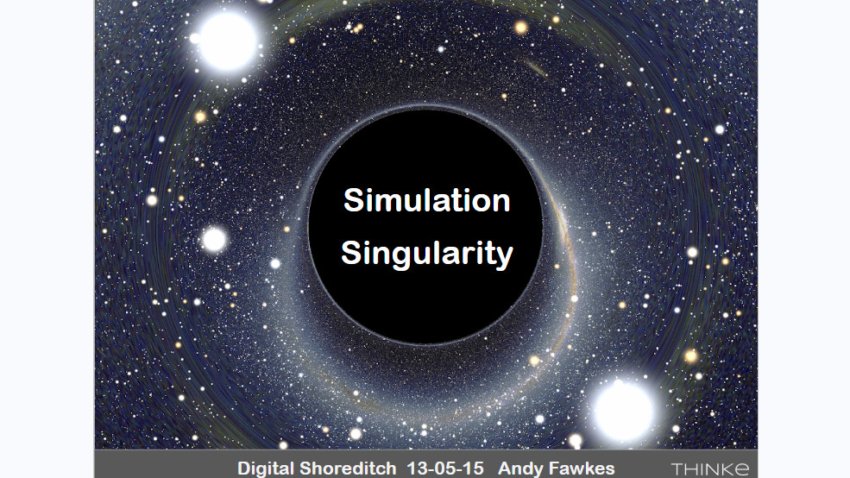
“Will there be a world where the simulation may be just as good as the real world?” That’s the rather grand question I put to a lunchtime crowd at London’s Digital Shoreditch festival on 13 May 2015, in a lightning talk with the somewhat overinflated title Simulation Singularity. Less than 10 minutes to solve the nature of reality felt ambitious even at the time. Over a decade on, with XR headsets, AI and the language of digital twins now standard fare across the training and simulation industry, I thought it was worth checking the progress towards this idea.
Origins of a Question
I borrowed the talk’s framing directly from the technological singularity, the hypothetical point at which artificial intelligence matches, then exceeds, human intelligence. My pitch was simpler, or at least I thought it was at the time: apply the same idea to simulation itself. If AI could one day become indistinguishable from human intelligence, could a simulated world become indistinguishable from the real one?
The slides ran through the breadth of simulation already in use in 2015, from battle simulation and spacewalk training to medical simulators, traffic modelling and, memorably, virtual horse racing, which remains one of the more niche facts I have ever put in front of a festival audience. Weather forecasting was my standing example of a system simulation still couldn’t fully crack. Two decades of computing growth had only pushed reliable forecasts from two days to five at that time, which I offered as evidence that some systems, chaotic by nature, don’t yield easily to more processing power.
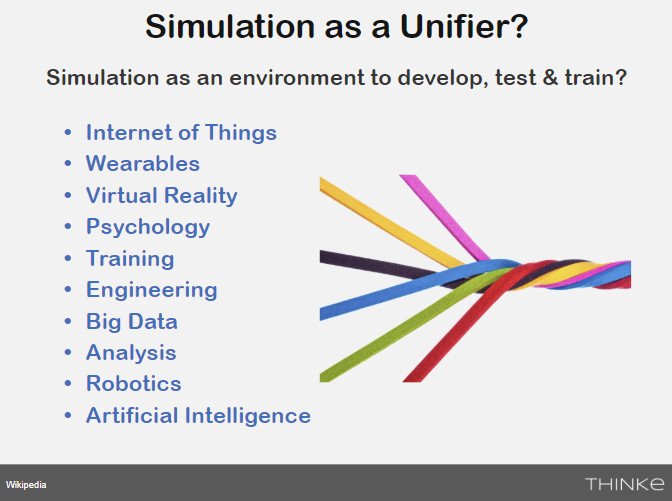
One line from the talk still holds up rather better than I expected: simulation, I argued, could act as “a unifying platform” for the scattered technologies of the day, among them the Internet of Things, virtual reality, big data and robotics. That’s the one prediction from an otherwise fairly hand-wavy talk that I’d happily stand behind today.
What Vice Made of It
The talk didn’t stay inside Shoreditch Town Hall, which came as a genuine surprise to me at the time. Motherboard’s Victoria Turk covered it for Vice under the headline “Simulated Worlds Will Soon Be Indistinguishable From Reality,” giving the term its first outing in the tech press and after interviewing me giving me, briefly, delusions of having said something profound.

The article preserved a line I’m still glad is on the record, which was “if you’re going to have artificial intelligence in the real world, maybe it’s best to test it in a simulation first.” I’ll also confess that Turk’s aside about me looking forward to strapping on an Oculus Rift in old age to escape my weary body has aged into something closer to a retirement plan than a throwaway line.
A List That Kept Growing
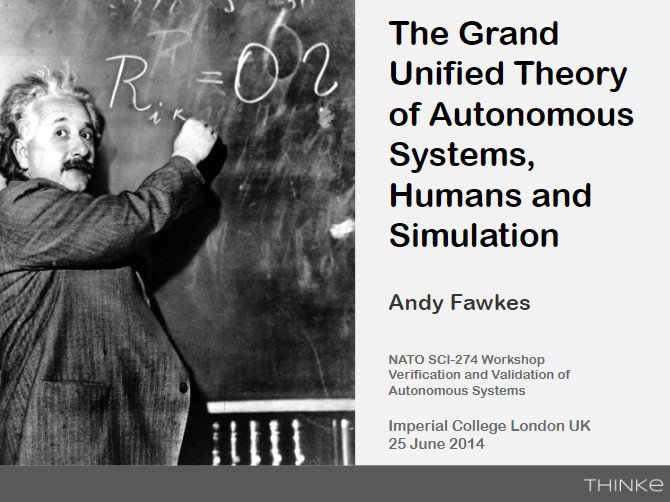
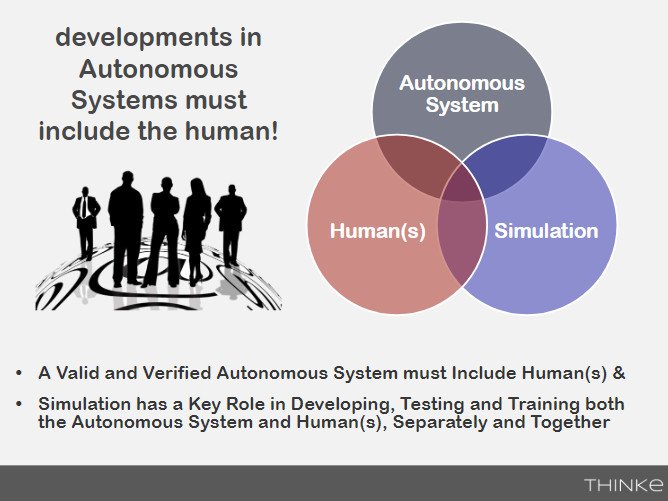
What strikes me looking back is how consistent the underlying thesis has been, even as the technology list around it kept expanding, one strand at a time. A year before Digital Shoreditch, in June 2014, I’d spoken at a NATO workshop on verification and validation of autonomous systems, arguing that a valid autonomous system must include humans, with simulation central to developing, testing and training both, and the drones and self-driving cars of that talk turned out to be an early thread in the same convergence rather than a one-off.
The rest of the list filled in steadily after that. A 2015 report on massively multiplayer game architecture, written for the MoD together with Steve Webley of Staffordshire University shortly after Digital Shoreditch, translated the unifying instinct into defence language. By 2020, a paper on gaming ecosystems for NATO’s Modelling and Simulation Group named the enabling technologies more precisely: game engines, Cloud computing, XR, AI, and data capture and exploitation. I gave the whole convergence a proper name in 2021 and 2022 with the “Military Metaverse” framing, and by 2025 advanced networking and 3D data standards such as OpenUSD and glTF had joined the list too. Autonomy and robotics has stayed on that list throughout, and it’s worth a mention now not because it’s new, but because of what’s happening to it in Ukraine, where drones account for an estimated 80 percent of combat losses, a genuinely sobering figure among an otherwise fairly cheerful list of enabling technologies.
Why It Held Up
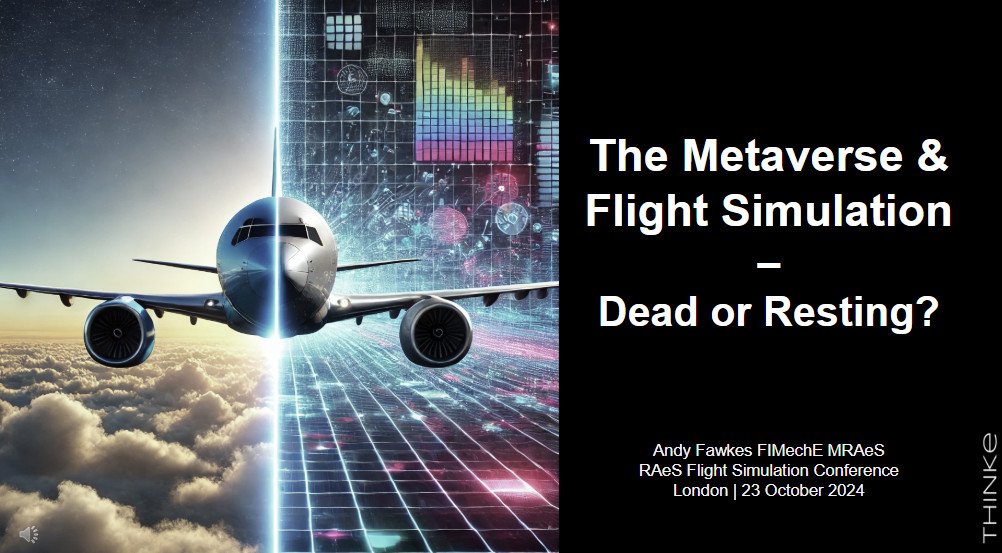
None of the above happened without the occasional wobble on my part. In a 2024 talk to the Royal Aeronautical Society’s Flight Simulation Conference, I asked the question directly: with AI now dominating the headlines, is the metaverse framing resting, or dead? My answer then still stands, somewhat to my relief. The underlying technologies, XR, AI, data, cloud and autonomy among them, keep advancing regardless of which label happens to be fashionable in a given year. Labels come and go, rather like my confidence in any given prediction. The convergence and unification they describe doesn’t.
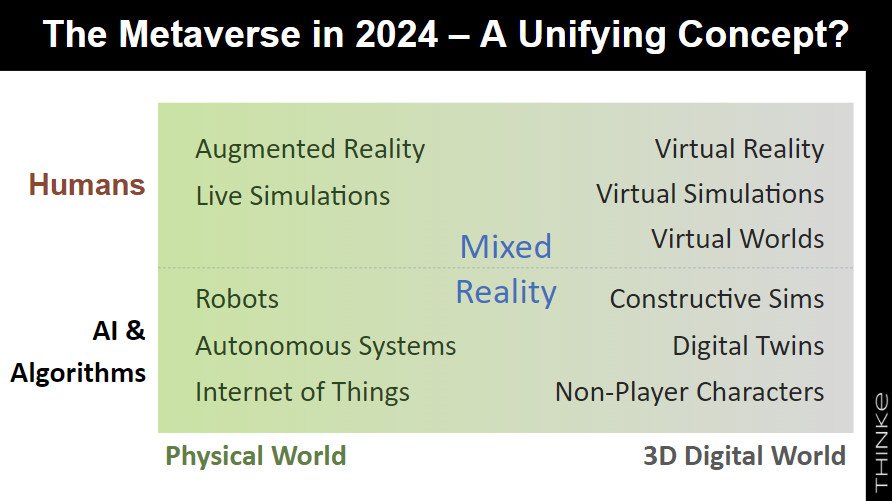
That’s arguably the real lesson I’d draw from the last decade. The unifying vision was never really about the metaverse, or any single named technology I happened to be excited about that year. It was, and remains, about closing the gap between the physical world and whatever digital model we build to represent it.
The Brain as the Ultimate Simulator
I didn’t end the 2015 talk on a technological note, which in hindsight was probably the wisest decision I made that entire ten minutes. After working through Plato’s allegory of the cave and a slightly cheeky nod to the Matrix, I turned the closing point inward. The brain, I argued, has been simulating for millions of years already, replaying memories, rehearsing conversations, dreaming up pasts and futures that never happened. Whatever the industry builds next, that remains a fairly high bar, and one none of my subsequent papers have come close to clearing even with the rise Large Language Models.
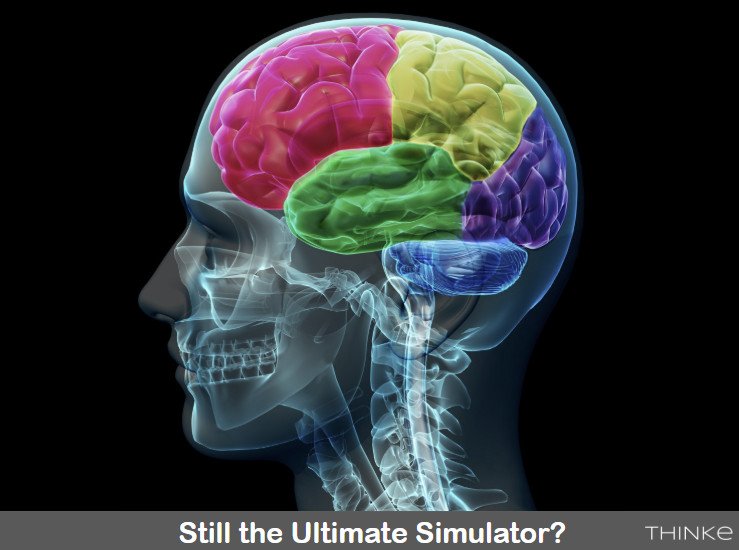
It’s a useful check on any decade long thesis of mine, particularly one that started life as a lunchtime talk squeezed in between other festival sessions on tech and start-up pitches. The technology list has grown steadily since, but the closing argument I made in 2015 hasn’t needed updating at all: the target was never really artificial, it was quietly outperforming every simulator I’ve written about since.
What Comes Next
Ten years felt like a reasonable interval to check my own thesis against, not least because any longer and I risk this becoming a twenty year retrospective written from a care home, Oculus Rift firmly in place. Whichever technology on that list moves fastest next, XR, AI, autonomy or something not yet named, I expect the same underlying question will still apply: not whether it’s impressive, but whether it’s closing the gap between the world and our model of it. I’ll keep tracking that here and at r2.news.
You can see the complete set of Simulation Singularity slides, the talk and transcript here: