
Simpler Smart Glasses May Dominate
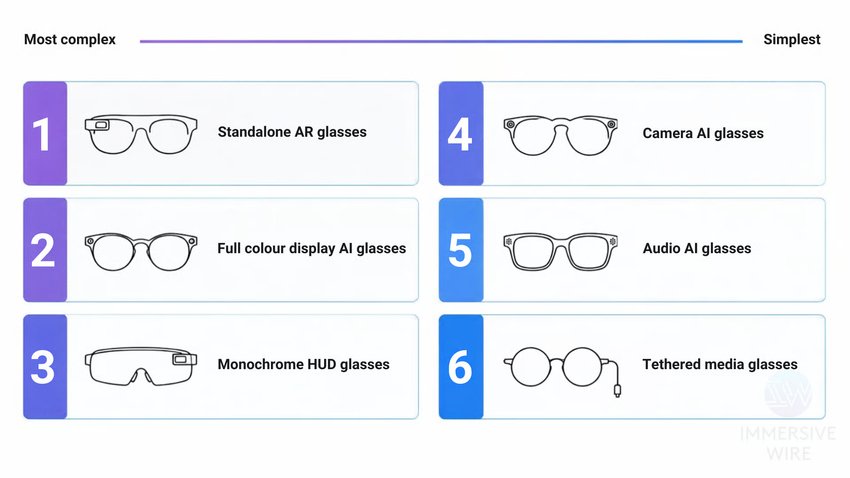
⊲ Immersive Wire ⊳ Tom Ffiske argues in Immersive Wire that smart glasses makers are fighting physics, with waveguides delivering under 1% of projector light, batteries of about 250 mAh versus at least 4,000 mAh in phones, and heat sitting against the wearer’s temples. Manufacturing capabilities differ internationally, with China benefiting from established production networks and Western companies specialising in software, chips and precision optics. Reviewing six form factors, from Snap’s $2,195 Specs and Meta’s Orion prototype, reportedly around $10,000 per unit, down to audio glasses, he concludes that camera AI glasses without displays, such as the $449 Ray-Ban Meta Gen 3, are best placed to win volume in 2026, as cost outweighs display fidelity.
◂ If camera AI glasses such as the Ray-Ban Meta Gen 3 win on volume, hands-free AI coaching may reach trainees before true AR overlays do. ▸
⊲ Featured Image – Tom Ffiske ⊳
⊲ www.simulation.news ⊳